
Guide to Golf Grip Sizes
19. August 2025
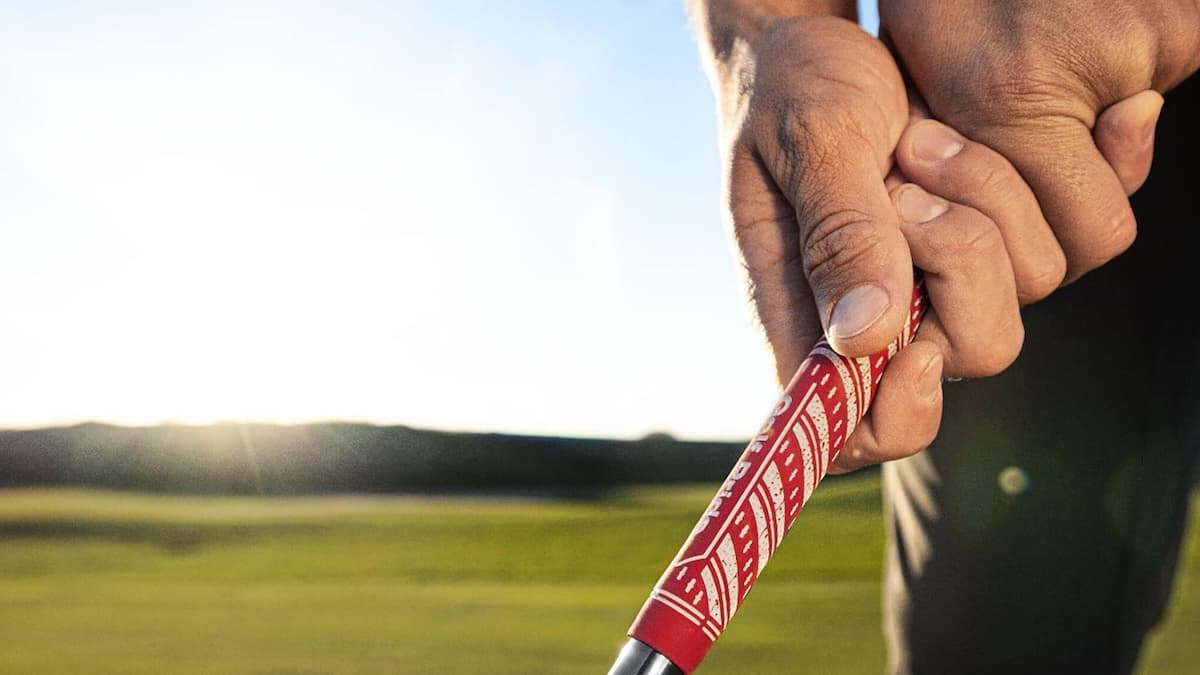
Guide to Golf Grip Sizes is a short golf blog post that looks at the different sizes of golf grips that are available on the market.
Golf grip sizes are designed to match the size of a golfer’s hands, swing style, and comfort preferences. Choosing the correct grip size can influence shot accuracy, control, and even help prevent injuries like tendonitis. Here’s a breakdown of the main grip size categories you’ll find on the market:
1. Undersize (Junior or Ladies’ Size)
- Diameter: ~1/64″ smaller than standard
- Best for: Golfers with smaller hands (generally glove size S or smaller), juniors, or some women players.
- Feel & Effect: Allows the fingers to wrap more fully around the grip, promoting better control for smaller hands. Oversized hands using undersize grips may cause excessive wrist action and inconsistent ball striking.
2. Standard Size
- Diameter: Baseline grip size (men’s standard is typically 0.580″–0.600″ core diameter)
- Best for: Most male golfers with average hand size (men’s glove size M–ML) and many female golfers with medium-to-large hands.
- Feel & Effect: Balanced feel that works for most players. Adding extra layers of grip tape under a standard grip can fine-tune thickness without changing grip style.
3. Midsize
- Diameter: ~1/16″ larger than standard
- Best for: Golfers with slightly larger hands (men’s glove size L), players seeking to reduce grip pressure, or those with arthritis.
- Feel & Effect: Reduces hand and wrist movement, which can help control hooks. Can feel more comfortable for players who tend to squeeze the club too tightly.
4. Oversize (Jumbo)
- Diameter: ~1/8″ larger than standard
- Best for: Golfers with very large hands (XL–XXL glove sizes) or those who need to limit wrist action due to injury or to control excessive hand rotation.
- Feel & Effect: Promotes lighter grip pressure, limits excessive wrist hinge, and can improve comfort for arthritic golfers. Some players find they lose feel for delicate shots if the grip is too large.
5. Specialty Variations
- Arthritis / Comfort Grips: Softer materials, sometimes larger diameter, to reduce hand strain.
- Tapered vs. Reduced Taper: Standard grips narrow from the top to the bottom, while reduced-taper grips maintain more consistent thickness along their length for even hand pressure.
- Custom Builds: Grip size can be tailored by adding wraps of tape under certain areas to create “build-up” grips for specific feel and performance goals.
Rule of Thumb for Fit:
When holding the club in your normal grip, your fingertips should just barely touch the pad of your palm. If your fingertips dig in too much, the grip is too small. If there’s a gap, it may be too large.
Here’s a visual-friendly hand measurement guide you can use alongside the chart to figure out the right golf grip size:
Step 1: Measure Hand Length
- Place your hand flat, palm up.
- Measure from the crease of your wrist (where it meets your palm) to the tip of your middle finger.
- Record in inches or centimeters.
Step 2: Measure Longest Finger Length
- Measure from the tip of your middle finger to the first crease at its base.
✅ Grip Size Recommendations Based on Hand Measurements
Hand Length (Wrist to Middle Finger Tip) Middle Finger Length Recommended Grip Size < 6.5″ (< 16.5 cm) < 3″ (< 7.6 cm) Undersize / Junior 6.5″–7.0″ (16.5–17.8 cm) 3″–3.5″ (7.6–8.9 cm) Standard 7.0″–8.0″ (17.8–20.3 cm) 3.5″–4″ (8.9–10.2 cm) Midsize > 8.0″ (> 20.3 cm) > 4″ (> 10.2 cm) Oversize / Jumbo
What are your thoughts on my Guide to Golf Grip Sizes?
Please leave a comment by completing a Contact Form.
To read more of my golf blog posts, click here.